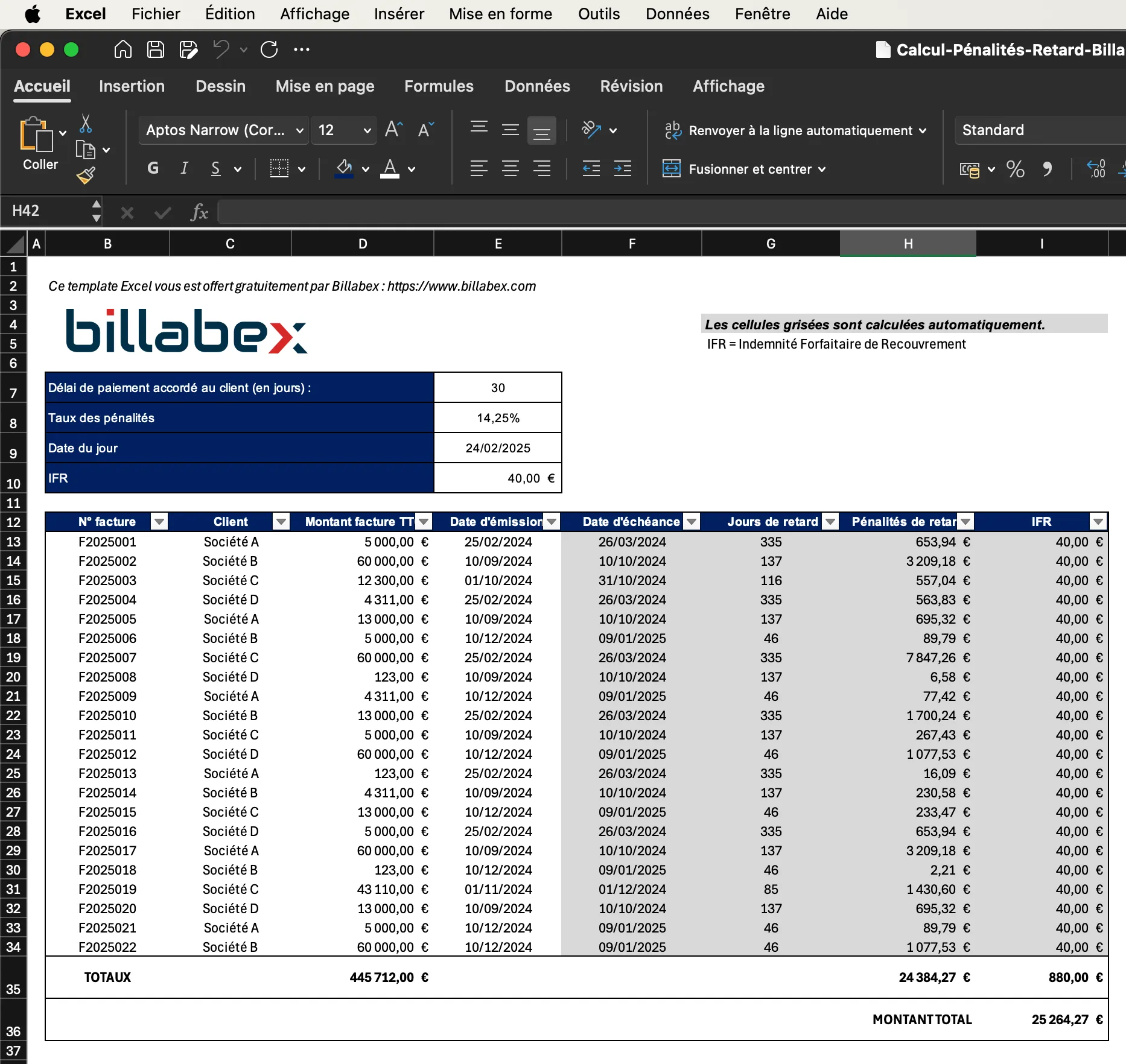
France’s LME law — the Loi de Modernisation de l’Économie — is one of the most important pieces of commercial legislation for any business operating in France. Enacted in August 2008, it introduced strict caps on B2B payment deadlines and established mandatory penalties for late payers. Understanding this law is not optional: non-compliance exposes businesses to administrative sanctions, and failing to apply late payment penalties means leaving money on the table. Whether you are a supplier trying to get paid on time or a buyer managing your own payment processes, the LME law shapes the rules of the game. This guide breaks down every aspect of the law — deadlines, penalties, exceptions, and practical tools — so your business can stay compliant and financially healthy.
What Is the LME Law?
Definition and background
The Loi de Modernisation de l’Économie (LME) was passed on 4 August 2008. One of its central objectives was to fight excessively long payment deadlines in French B2B commerce, which were notoriously damaging to small suppliers and subcontractors. Before 2008, it was common for large buyers to impose payment terms of 90 days or more, effectively using their suppliers as a free source of financing.
The LME put an end to this practice by introducing statutory ceilings on payment deadlines. It was subsequently reinforced by the Loi Hamon (2014) and the Ordonnance of 2019, which strengthened DGCCRF (France’s competition and consumer authority) enforcement powers and raised administrative fine ceilings significantly.
At its core, the LME transposes the European Late Payment Directive (Directive 2011/7/EU) into French law, ensuring that French businesses benefit from the same protections as their European counterparts.
Who is affected by the LME law?
The LME applies to all commercial transactions between professionals — that is, any sale of goods or provision of services between two businesses, regardless of their size or sector. This includes:
- Transactions between two French companies
- Transactions between a French company and a foreign company, provided French law governs the contract
- Public procurement (with slightly different deadlines for public authorities)
The law does not apply to transactions with individual consumers (B2C), which fall under the Consumer Code. Sole traders (auto-entrepreneurs) operating in a professional capacity are covered by the LME when contracting with other businesses.
Payment Deadlines Under the LME Law
The standard deadline: 30 days
In the absence of any contractual agreement to the contrary, the default payment deadline under the LME is 30 days from the date of receipt of goods or performance of the service. This is the baseline rule: if your invoice is silent on payment terms, 30 days applies automatically.
In practice, many businesses specify payment terms in their invoices and general terms and conditions (T&Cs). The invoice date is often used as the starting point for calculating the deadline, provided it is issued promptly after delivery or service completion.
Agreed deadline: maximum 60 days
Parties may contractually agree to a longer deadline, but the LME caps this at 60 days net from the date of the invoice, or 45 days end-of-month from the invoice date, whichever the parties choose. Both options represent the absolute statutory maximum — nothing longer is legally enforceable in France, even if the contract stipulates otherwise.
This distinction matters in practice:
| Option | Calculation | Example (invoice dated 1 March) |
|---|---|---|
| 60 days net | 60 calendar days from invoice date | Due: 30 April |
| 45 days end-of-month | 45 days from invoice date, then pushed to end of that month | 45 days = 15 April → end of April = 30 April |
Both options yield similar results in this example, but can diverge depending on the invoice date within the month.
Sectoral exceptions
The law allows certain sectors to maintain different deadlines under collective agreements validated by ministerial decree (accords dérogatoires). Historically, this applied to sectors such as seasonal goods, fresh food, and transport. However, the number of such exceptions has been progressively reduced by successive reforms. Any sectoral exception must be formally agreed between professional federations and published in the Official Journal — it cannot simply be imposed unilaterally by a buyer.
Penalties for Non-Compliance
Late payment penalties
When a payment deadline is missed, late payment penalties accrue automatically from the day after the due date, with no need for a prior formal demand. The rate is calculated as the ECB main refinancing rate plus 10 percentage points. For example, if the ECB rate stands at 3.65%, the applicable penalty rate is 13.65% per annum.
These penalties must be mentioned in the seller’s T&Cs and on the invoice. Failing to include them in your T&Cs does not exempt you from applying them — but it can complicate enforcement. See our detailed article on late payment penalties for calculation examples and practical guidance.
The €40 flat-rate compensation
In addition to interest, every overdue invoice triggers a €40 flat-rate compensation for collection costs (indemnité forfaitaire de recouvrement). This amount is due automatically from the first day of late payment, requires no proof of actual costs, and cannot be waived in advance.
If your actual recovery costs exceed €40 (for example, because you engaged a collection agency or a lawyer), you may claim additional compensation — but you must justify the excess with supporting documents.
The €40 flat fee applies per invoice, not per client. A client who is late on five invoices owes you five separate €40 fees.
Administrative sanctions (DGCCRF)
Beyond the civil remedies available to creditors, the DGCCRF actively monitors compliance with the LME’s payment deadline rules. Companies found to be systematically paying late — or imposing unlawful contractual terms — face administrative fines of up to:
- €75,000 for an individual
- €2,000,000 for a legal entity (doubled for repeated offences within two years)
The DGCCRF publishes an annual ranking of the worst offenders (publication des noms), which can cause significant reputational damage. Large listed companies are also required to disclose payment deadline statistics in their annual management report.
LME Law and Accounts Receivable Management
Integrating LME into your T&Cs
The most effective way to leverage the LME law is to integrate its provisions directly into your general terms and conditions of sale (CGV). Your T&Cs should clearly state:
- The applicable payment deadline (30 days by default, or a contractually agreed period up to 60 days net / 45 days end-of-month)
- The late payment penalty rate (ECB rate + 10 points, updated each semester)
- The €40 flat-rate compensation, due automatically on the first day of late payment
- Any right to suspend service delivery in the event of non-payment
A well-drafted T&C clause serves a dual purpose: it sets clear expectations for your clients and strengthens your legal position should you need to pursue recovery. Contracts that are silent on these points still fall under the LME default rules, but a clear clause reduces disputes.
Automate follow-ups with software
Monitoring LME compliance manually across dozens or hundreds of clients is inherently error-prone. A dedicated accounts receivable management tool solves this problem by:
- Automatically flagging invoices approaching or past their LME deadline
- Triggering pre-due and post-due payment reminders with the appropriate tone and channel (email, SMS, phone)
- Calculating the correct late payment penalties and flat-rate compensation on each overdue invoice
- Generating penalty invoices when penalties are claimed
Billabex is an AI-powered accounts receivable platform built for French SMEs. It knows the LME rules, applies them automatically, and handles the entire follow-up workflow — so you collect faster without spending time on manual chasing.
Conclusion
The LME law is a powerful tool for French B2B creditors, but only if you know how to use it. Understanding the 30-day default deadline, the 60-day contractual cap, and the automatic penalty mechanisms gives you the legal basis to demand timely payment and recover costs when clients pay late. The key is to build these rules into your commercial documentation and back them up with a systematic follow-up process. In a business environment where late payments remain endemic, that combination of legal knowledge and operational discipline is what separates businesses that get paid on time from those that struggle with chronic cash flow problems.