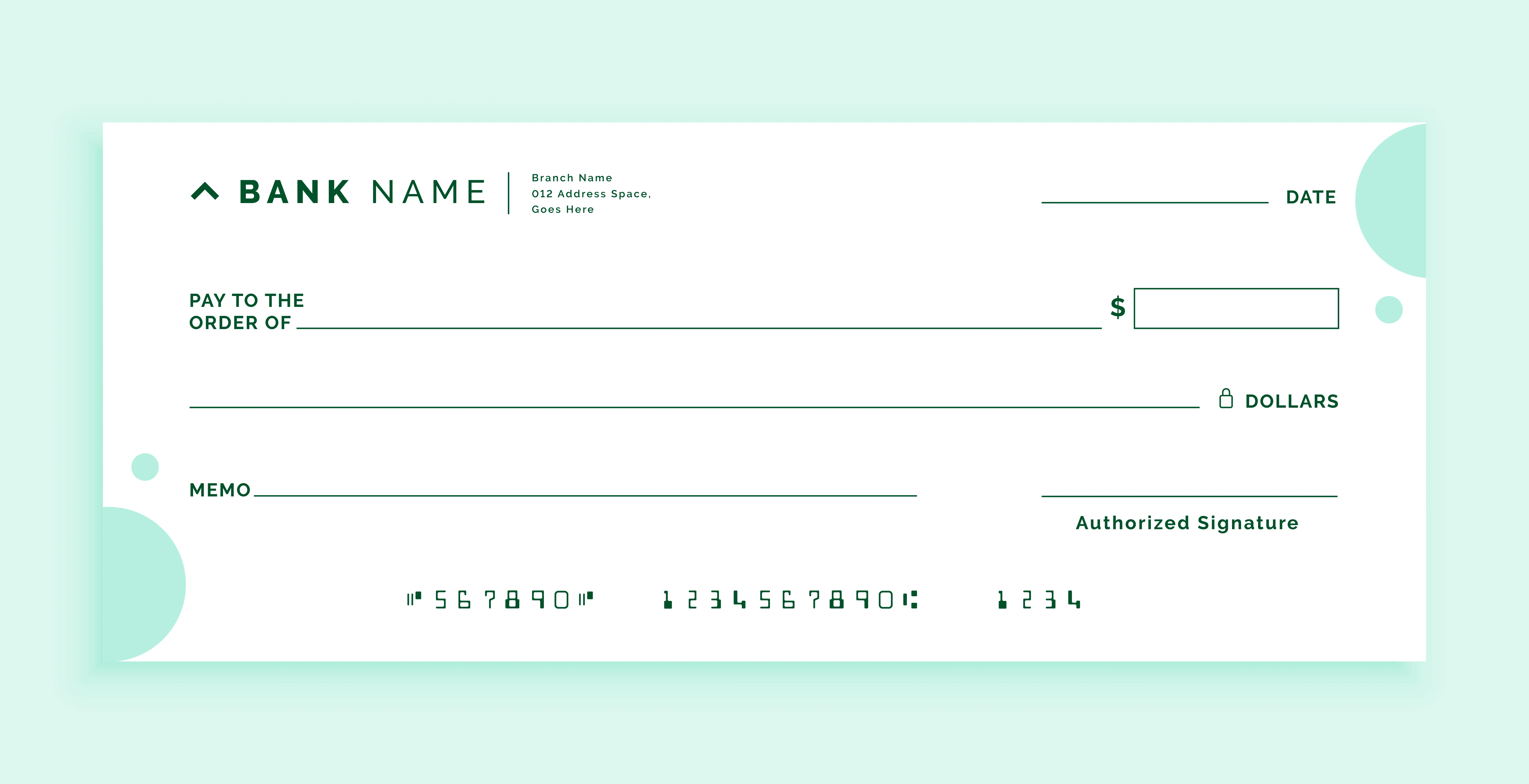
The check remains a common payment method, despite the rise of credit card transactions. However, it presents a significant risk for businesses: unpaid checks.
An unpaid check, or insufficient funds check, can quickly become a source of stress and administrative complications.
It is therefore essential for business owners, administrative and financial managers, or collection agents to understand the causes, consequences, and solutions to deal with this situation.
In this article, you will find everything you need to know about unpaid checks and best practices for avoiding or managing them effectively.
We have also published a more general article on how to Accelerate Your B2B Payments with Secure Payment Methods.
What is an unpaid check?
An unpaid check occurs when the issuer’s bank refuses to pay the amount written on the check for various reasons, the main one being insufficient funds in the bank account.
It can also be caused by the account holder placing a stop payment in case of loss or theft, or by irregularities on the check, such as missing details or forgery.
The main causes of an unpaid check
- Insufficient funds: This is the most common cause. The issuer doesn’t have enough money in their account to cover the check amount.
- Stop payment: The account holder can ask the bank to block the check in case of loss, theft, or fraudulent use.
- Check irregularity: A poorly written check (scratches, missing signature) or a forged one can also be rejected.
- Closed or unavailable account: If the issuer’s account is closed or subject to a legal seizure, the bank won’t be able to honor the check.
Consequences of an unpaid check for the issuer
For the issuer of an unpaid check, the consequences can be serious, both financially and legally.
-
Banking ban: If the issuer does not resolve the situation quickly, they can be banned from issuing checks for up to 5 years. This ban is reported to the Central Check File (FCC), managed by the Bank of France.
-
Criminal penalties: In cases of fraud or deliberate attempts to avoid payment (e.g., abusive stop payment), the issuer risks a fine of up to €375,000 and up to 5 years in prison.
-
Bank fees: The bank may also charge fees related to the rejected check. These fees are capped at €30 for checks under €50 and €50 for those above this amount.
Impact on the recipient of the unpaid check
For the recipient, an unpaid check represents an uncollected debt, which can lead to significant cash flow issues, especially if the amounts are large or if unpaid checks accumulate.
What to do in case of an unpaid check?
The first step when you receive an unpaid check is to try to resolve the issue amicably with the issuer. It could be a simple oversight or a temporary cash flow problem. However, if no solution is found, here are the steps to follow:
-
Request an alternative payment: You can offer the issuer to pay by another means (bank transfer, cash).
-
Non-payment certificate: If the situation isn’t resolved within 30 days, request a non-payment certificate from your bank. This document is essential if you decide to initiate legal proceedings.
-
Legal action: If the issuer does not respond, you can contact a bailiff to initiate a forced recovery procedure.
Remedies for the company in case of an unpaid check
An unpaid check must be managed methodically to maximize the chances of recovering the debt. Here are some key steps:
1. Amicable remedies
Before starting legal proceedings, it is recommended to begin with an amicable recovery process. A simple reminder via letter or email may be enough to resolve the situation. It is also wise to remind the issuer of potential consequences, such as a banking ban.
2. Legal remedies
If amicable recovery fails, you can turn to legal procedures. Several options are available:
- Payment order: A quick and simple procedure that does not require appearing before a judge.
- Seizure: If you obtain a favorable decision, you can request the seizure of the issuer’s assets or bank account through a bailiff.
3. Using collection agencies
Another option is to use specialized collection agencies. Although they take a commission, this allows you to save time and maximize your chances of recovering the owed amount.
How to prevent unpaid checks?
It is always better to prevent unpaid checks than to deal with them afterward. Here are some best practices:
1. Refuse checks
If possible, limit accepting checks as a payment method, especially for large amounts. Instead, encourage bank transfers or card payments.
2. Investigate the client’s solvency
Before accepting a payment by check, especially from new clients, consider checking databases such as Infogreffe or Societe.com to evaluate the issuer’s solvency.
3. Use insurance against unpaid checks
There are specific insurances that cover the risk of unpaid checks. These insurances can be useful, especially in sectors where the risk of unpaid debts is high.
Fees associated with an unpaid check
The bank fees for both the issuer and the recipient of an unpaid check can quickly add up. They are generally proportional to the check amount and can go up to €50 for amounts over €50.
Criminal penalties
In addition to fees and banking bans, the issuer of an unpaid check may also face criminal penalties in cases of proven fraud. Penalties can be severe, including a fine of up to €375,000 and up to 5 years in prison.
To delve deeper into this topic, check out our strategic guide on securing receivables and managing client risk, which provides a comprehensive overview of tools and best practices to implement.